Key points
- Strike (X): all 10 pins on the first delivery; spare (/): all 10 pins in two deliveries.
- Split: pins left standing with a gap between them, after the 1-pin has fallen (e.g. 7-10).
- Turkey: three strikes in a row; hambone: four.
- Pocket: the ideal point of impact, between the 1 and 3 pins for a right-hander.
- Most technical terms come from English, because modern bowling took shape in the United States.
Why are so many bowling terms in English?
Ten-pin bowling was codified in the United States in the late 19th century, and its technical vocabulary spread unchanged around the world. In France as in Morocco, players say “strike”, “spare” or “split”, and league bowlers readily use English jargon. Where a French equivalent is in common use, it is given below in brackets. For the rules themselves, see our guide to the rules of bowling.
A to B
Anchor: the last bowler in a team’s line-up, often the most consistent or the most reliable under pressure.
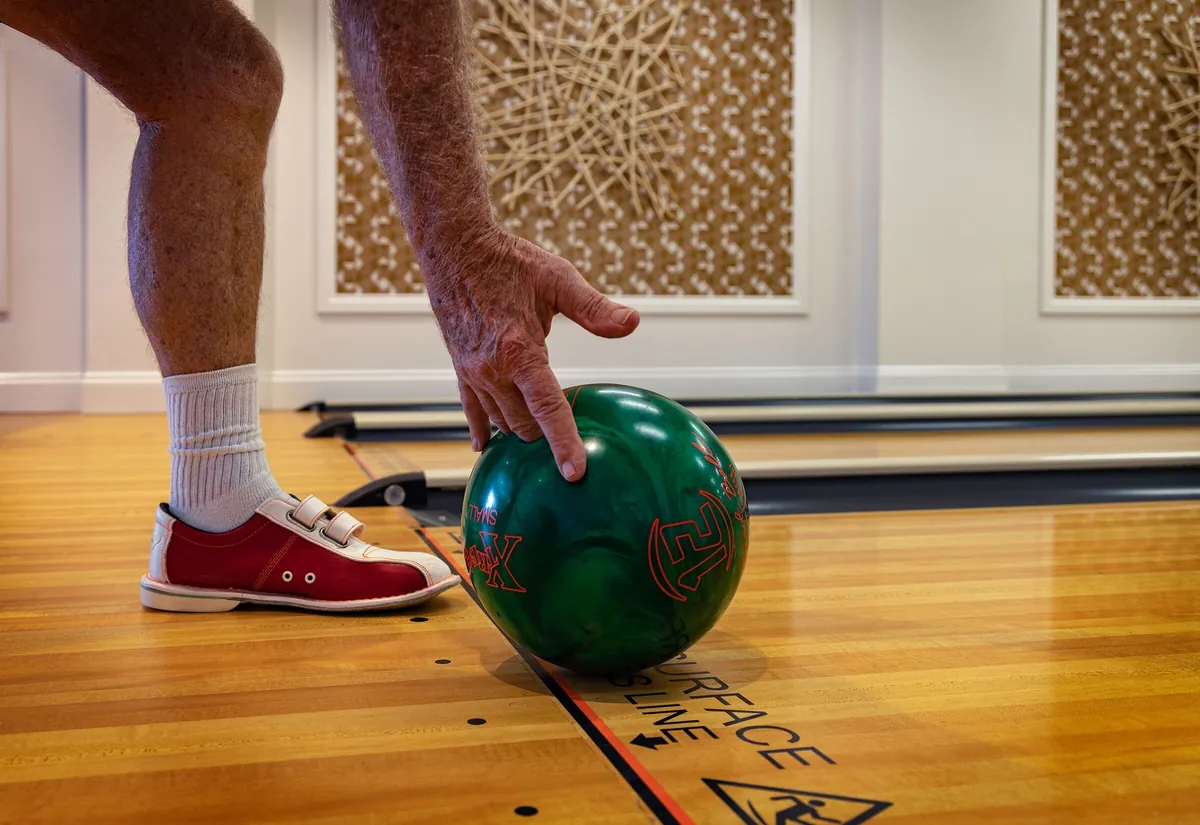
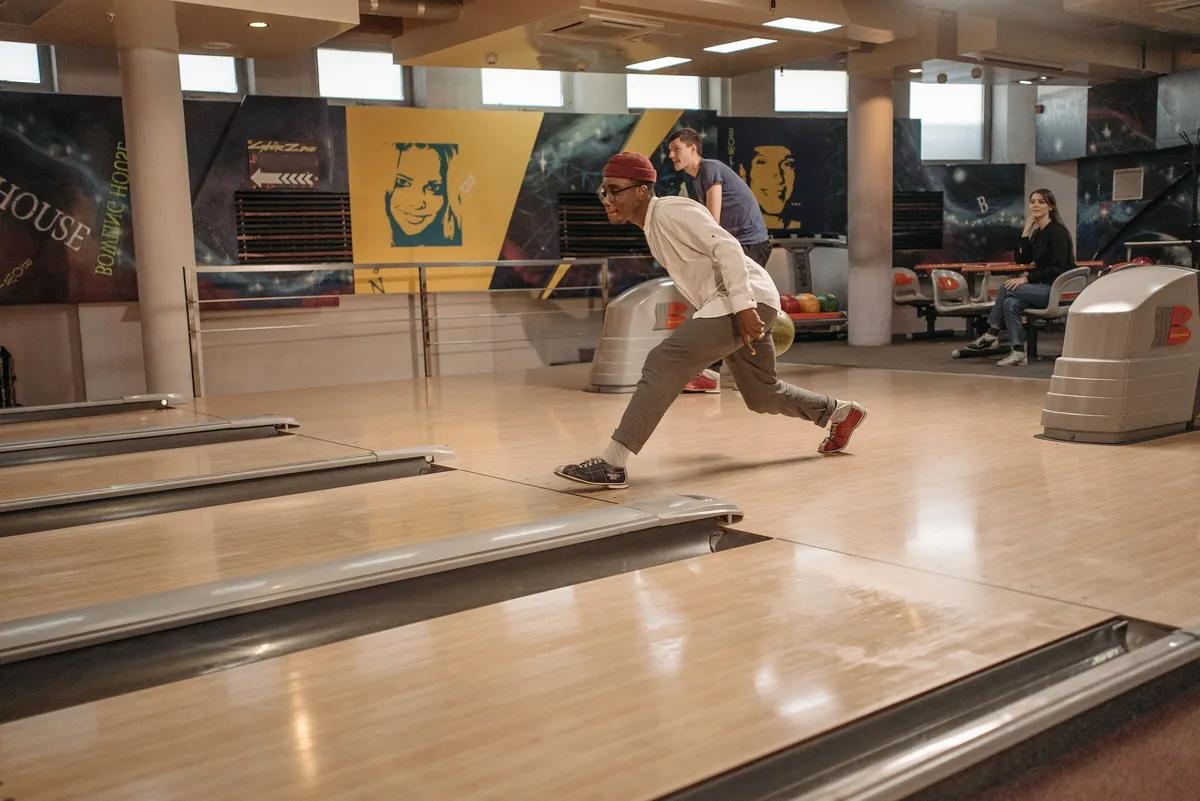
Approach (approche): the area, at least 4.57 m (15 ft) long, in front of the foul line, where the bowler walks and slides before releasing the ball. Also refers to the walk itself, in 4 or 5 steps.
Arrows (flèches): seven arrow-shaped markers on the lane, every 5 boards, used as aiming targets.
Average (moyenne): total pinfall divided by the number of games played; an indicator of a bowler’s level.
Axis of rotation (axe de rotation): the axis around which the ball spins after release; its tilt and direction determine the shape of the hook.
Baby split: an easy split in which the two pins are close enough together for the ball to hit both, such as the 2-7 or 3-10.
Backend: roughly the last third of the lane, with little or no oil, where the ball grips and turns towards the pins.
Backup ball: a ball that turns the opposite way to a natural hook (to the right for a right-hander).
Ball return (retour de boules): the track and rack that bring the ball back to the bowler; never put your hands in it when a ball is coming.
Big four: a split leaving the 4, 6, 7 and 10 pins, two on each side; one of the hardest to convert.
Blind: the score given for an absent bowler in a league team, usually their average minus a few pins, depending on the rules.
Boards (planches): the lengthwise strips that make up the lane; there are 39 of them, numbered for aiming.
Breakpoint: the point on the lane where the ball stops skidding and starts turning sharply towards the pins.
Brooklyn: a shot that hits the opposite pocket, for example between the 1 and 2 pins for a right-hander. A Brooklyn strike is a “lucky” strike.
Bucket: a diamond-shaped cluster of four pins left standing, 2-4-5-8 or 3-5-6-9.
Bumpers (barrières): barriers that close off the gutters for children and beginners.
C to D
Carry: a ball’s ability to knock down all the pins on a good hit; “good carry” means few pins left after a pocket hit.
Carrydown: oil carried by the balls towards the far end of the lane, which makes the backend slicker as the games go on.
Clean game: a game without a single open frame, with a strike or spare in each of the 10 frames.
Core: a block of different density inside a ball, whose shape influences how the ball reacts on the lane.
Coverstock: the material of the ball’s outer surface (polyester, urethane, reactive resin), which largely determines its grip on the lane.
Cranker: a bowler who puts a lot of revs on the ball, favouring power and a big hook.
Dead ball: a delivery that is cancelled and bowled again, for example if a pin was missing or the bowler was interfered with.
Dead wood: fallen pins left on the lane or in the gutter; they must be cleared before the next delivery.
Dots: round markers set into the approach and at the start of the lane, which help you position yourself and aim.
Double: two strikes in a row.
Drilling (perçage): drilling the holes in a ball to fit the bowler’s hand and the reaction they are looking for.
Dutch 200: a game that alternates strikes and spares from start to finish; it is always worth exactly 200 points.
E to G
Entry angle (angle d’entrée): the angle at which the ball enters the pocket; the sharper it is, the better your chances of a strike.
Flat 10: a 10-pin left standing after a pocket hit, because the 6-pin slid flat into the gutter without touching it.
Foul (faute): touching or crossing the foul line during a delivery; any pins knocked down do not count. Marked F.
Foul line (ligne de faute): the line separating the approach from the lane, 18.29 m (60 ft) from the 1-pin.
Four-bagger: four strikes in a row (see also hambone).
Frame: one of the 10 turns in a game, with a maximum of two deliveries (three in the 10th).
Greek church: a five-pin split, 4-6-7-9-10 or 4-6-7-8-10, whose outline looks like the steeples of a church.
Grip: the way you hold the ball (conventional, fingertip); also refers to the inserts fitted in the holes.
Gutter, channel (gouttière): the trough on each side of the lane; a ball that drops into it can no longer knock down any pins. This is known as a “gutter ball”.
H to O
Hambone: four strikes in a row in a game, a term popularised by American TV broadcasts.
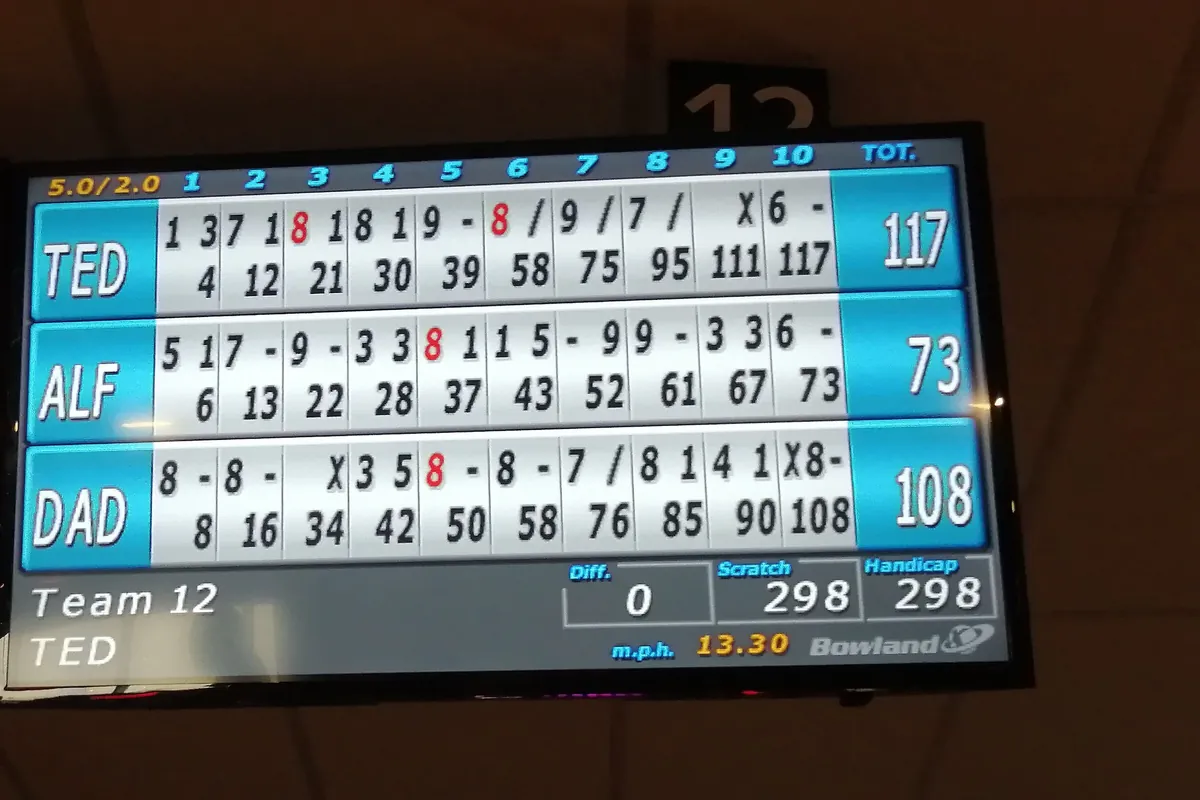
Handicap: a pin bonus given to bowlers with a lower average to level out a competition. See our guide on average and handicap.
Headpin: the 1-pin, at the tip of the triangle.
Heads: the first third of the lane, the most heavily oiled, where the ball skids.
Hook (crochet): the curved path of the ball, which starts straight and then turns towards the pins.
House ball (boule maison): a ball provided by the centre, usually made of polyester, with standard holes.
House shot: the standard oil pattern used in bowling centres, which forgives mistakes by guiding the ball towards the pocket.
Kingpin: the 5-pin, in the middle of the triangle, hidden behind the 1-pin.
League (ligue): a regular competition, often weekly, between teams or individual bowlers, with standings over the season. In Morocco, the ASBM (Association Sportive du Bowling Marocain, the Moroccan Bowling Sports Association) runs a weekly league at the Megamall in Rabat.
Leave: the pins left standing after the first delivery.
Light hit: a hit that is too thin in the pocket, with the ball barely touching the 1-pin.
Lofting: releasing the ball too high, so that it lands noisily on the lane; bad for accuracy and for the lane.
Messenger: a pin (often the 1) that flies across the back of the pin deck to knock down an isolated pin, such as the 10.
Nose hit: a ball that hits the 1-pin head-on, making splits more likely.
Oil pattern: how the oil is spread on the lane, in terms of length and volume; it has a strong influence on the ball’s path. See lane oil patterns.
Open frame (frame ouverte): a frame with neither a strike nor a spare, where pins are still standing after both deliveries.
P to R
PAP (positive axis point): the point on the ball at the end of the bowler’s initial axis of rotation, on the pocket side; it is used for custom drilling.
Pin deck: the area at the end of the lane where the pins stand.
Pinsetter: the machine that picks up and resets the pins and returns the ball.
Pocket: the ideal point of impact for a strike, between the 1 and 3 pins for a right-hander, and between the 1 and 2 for a left-hander.
Polyester: the material used for entry-level balls and house balls; it has little grip, which makes it ideal for throwing straight and aiming at spares.
Pro shop: a specialist shop that sells, drills and maintains bowling balls. In Morocco, see the Tamaris Bowling pro shop.
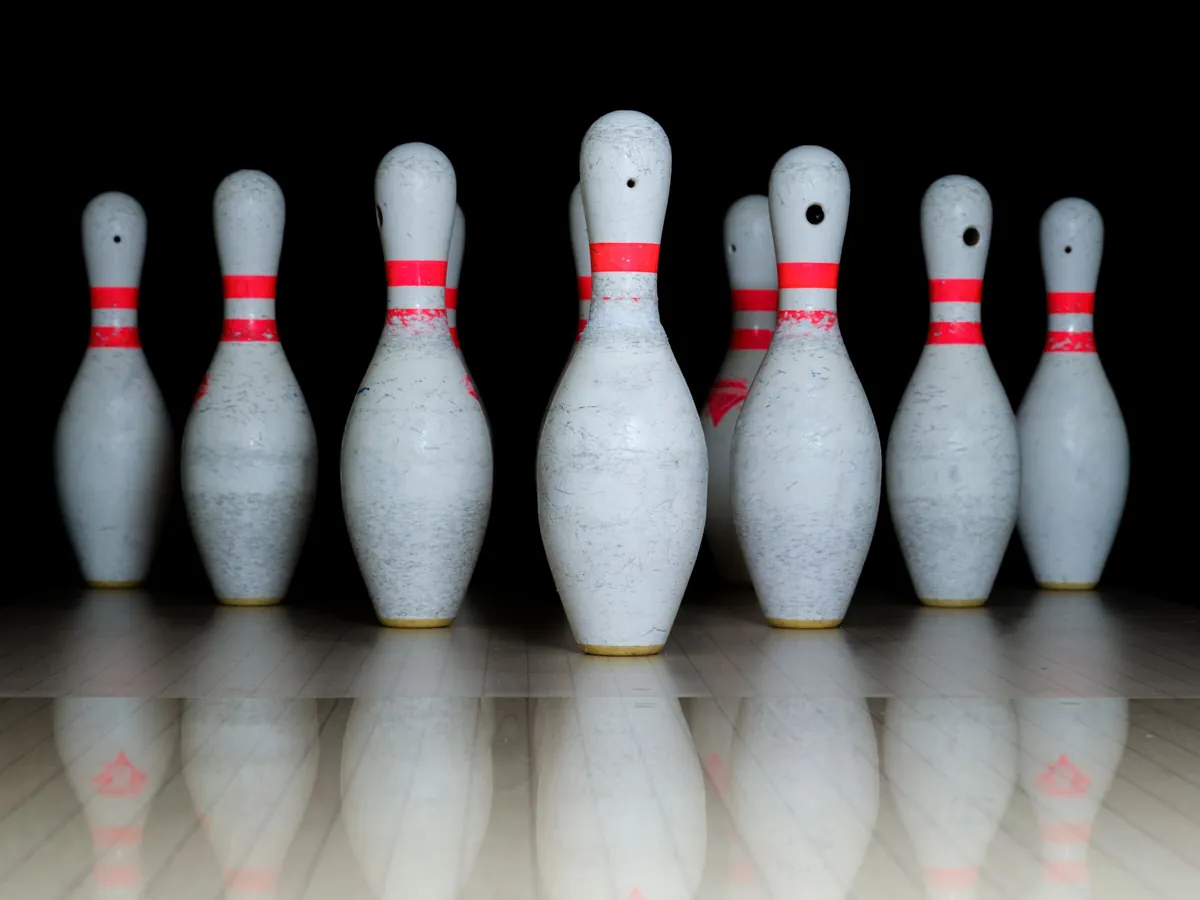
Rack: the 10 pins set up in a triangle; a “full rack” means all 10 pins standing.
Reactive resin (résine réactive): a high-grip coverstock that produces a powerful hook; used by experienced bowlers.
Revs (revolutions): the number of times the ball turns between release and the pins, often expressed in revolutions per minute.
S
Scoresheet (feuille de score): the 10-frame grid on which deliveries and the running score are recorded. See our guide on how to keep score.
Scratch: the raw score, without handicap. A scratch competition is played without any bonus.
Series (série): the total of several consecutive games, usually three in league play.
Sleeper: a pin hidden behind another, such as the 8 behind the 2 or the 9 behind the 3.
Spare: all 10 pins knocked down in two deliveries. Marked /, it is worth 10 plus the next delivery.
Spin (effet): the rotation put on the ball at release, which produces the hook.
Split: pins left standing after the first delivery, with the 1-pin down and at least one gap between or in front of them (e.g. 7-10, 4-6).
Sport shot: a more demanding competition oil pattern that gives the ball little guidance.
Strike: all 10 pins knocked down on the first delivery. Marked X, it is worth 10 plus the next two deliveries.
String pinsetter: a machine in which each pin is attached to a string; cheaper to maintain, it is becoming common in leisure centres.
Stroker: a bowler with a smooth, consistent style who favours accuracy over power.
T to Z
Tap: a good pocket hit that nevertheless leaves a single pin standing, often the 10 or the 7.
Track: the visible worn band on the ball, showing the area in contact with the lane as it rolls.
Transition: the way the oil pattern changes as more deliveries are bowled, forcing bowlers to adjust their line.
Turkey: three strikes in a row.
Two-handed: a delivery style without the thumb, with the ball supported by both hands, which generates a lot of revs.
Washout: a leave similar to a split but with the 1-pin still standing, such as 1-2-10 or 1-2-4-10.
X: the symbol for a strike on the scoresheet.
To put this vocabulary into practice, start with our guide on how to bowl, then check your scores with the score calculator.
Frequently asked questions
What does turkey mean in bowling?
A turkey is three strikes in a row in the same game. Four strikes in a row are called a hambone or a four-bagger.
What is the difference between a strike and a spare?
A strike knocks down all 10 pins on the first delivery of the frame; a spare knocks them down in two deliveries. A strike is worth 10 plus the next two deliveries, a spare 10 plus the next delivery.
What is a split in bowling?
A split is a set of pins left standing after the first delivery, with the 1-pin down and a gap between them. The 7-10 is the most famous.
What is a Brooklyn in bowling?
A Brooklyn is a shot that hits the opposite pocket: between the 1 and 2 pins for a right-hander, and between the 1 and 3 for a left-hander.
What is the gutter called in bowling?
The gutter is also called the channel (in French, “gouttière”). A ball that drops into it is a gutter ball and does not knock down any pins.