Key points
- Where: the Tamaris Bowling pro shop, Route d'Azemmour km 15, Dar Bouazza (Casablanca).
- What: ball sales, custom drilling by a technician, bowling shoes and accessories.
- Why a pro shop: a new ball is sold without holes; having it drilled to fit your hand is what makes the difference.
- Rough budget: in Europe, an entry-level ball costs €60–100 and a mid-range ball €100–180; drilling is often included when you buy the ball at the pro shop.
- Ordering from abroad means paying customs duties and VAT, and the ball arrives without holes: it will have to be drilled anyway.
The Tamaris Bowling pro shop in Casablanca
Located inside Tamaris Bowling, the 12-lane Brunswick bowling centre at the Tamaris Aquaparc complex, the pro shop is the go-to address for bowlers who want to move on from rental balls to their own equipment. Here you will find:
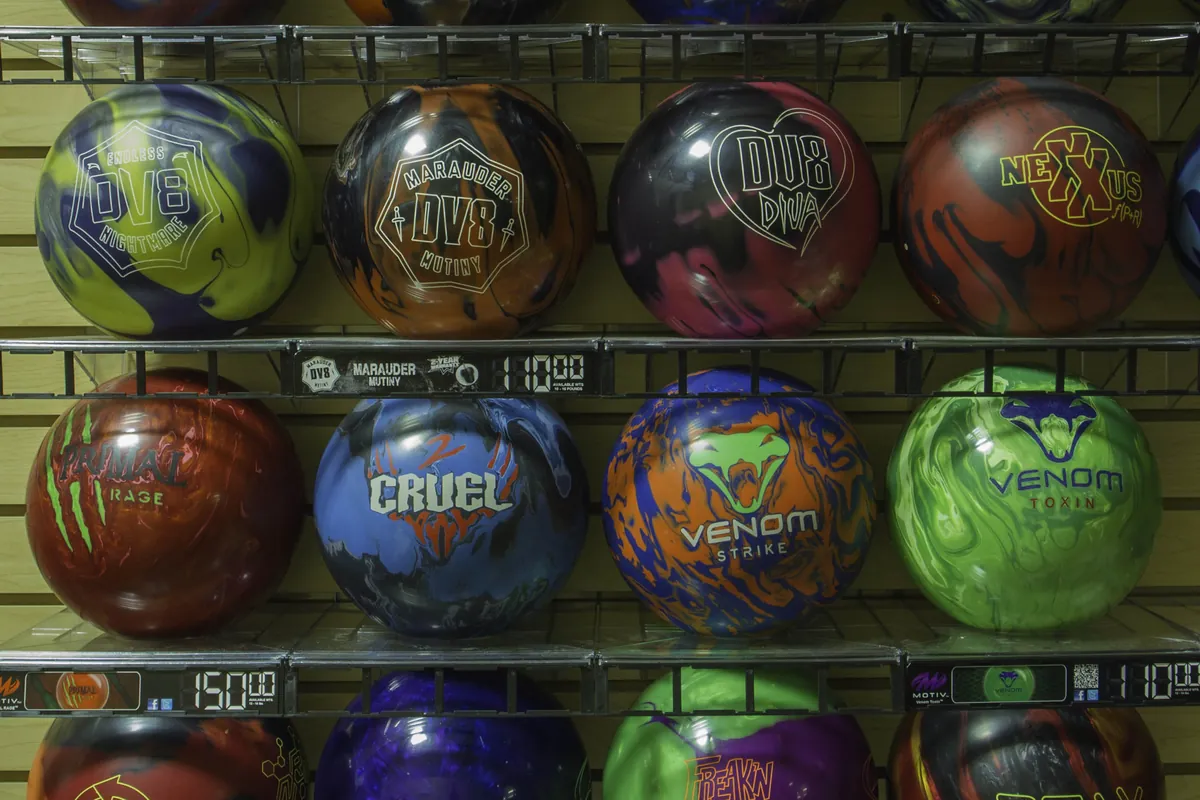
- bowling balls for sale, whether you are starting out or looking to improve;
- a technician who drills balls to fit your hand: finger and thumb measurements, span, drilling angles;
- bowling shoes, so you no longer have to rely on rental shoes;
- accessories: bags, towels, grip aids, protective gear, care products.
The pro shop is nothing new: as early as May 2012, the Team Tamaris Bowling club announced on its blog the “upcoming opening of a ProShop at Tamaris bowling”, with the catalogue and prices available at the front desk. It is a rare advantage in Morocco: elsewhere, bowlers have to order their ball from Europe or the United States, then find someone who can drill it. Buying locally means you can try things out, get advice, have the drilling adjusted after a few games, and test your ball straight away on some of the best-maintained lanes in the country: along with the Megamall in Rabat, Tamaris is one of the two bowling centres in Morocco whose lanes are oiled with a genuine lane machine.
Before you go: call the centre on 05 22 96 53 69 to check that the technician will be there, whether balls and shoes in your size are in stock, and how long it takes if a model has to be ordered. The centre is open Monday to Friday from 2 pm to 11 pm, and at weekends and on public holidays from noon to midnight.
Playing in a league with the ASBM (Association Sportive du Bowling Marocain, the Moroccan Bowling Sports Association) or with Bowling Club Casablanca? Ask the experienced bowlers on your team for advice: most of them bought their equipment through a pro shop and can point you towards a suitable first ball.
What is a bowling pro shop?
A pro shop is a bowling centre's specialist store. Its job goes beyond selling: a trained technician carries out the workshop tasks that a personal ball requires. According to the technician training programme of the USBC, the US bowling federation, this work covers:
- measuring the hand and drilling new balls;
- fitting and replacing finger inserts and thumb slugs;
- plugging and redrilling a ball whose grip no longer fits;
- maintenance: resurfacing, oil extraction, repairs;
- advice on balls, shoes, bags and accessories, and watching the bowler on the lane.
How does custom drilling work?
A new ball is sold without any holes. Drilling is the most important step of the purchase: a ball drilled to fit your hand can be held without squeezing, your thumb comes out cleanly and your release becomes consistent. Here are the usual steps:
- Observation and discussion: your delivery style (straight or hook, one-handed or two-handed), speed, how often you play and what you are aiming for.
- Choosing the weight: one that lets you bowl three games without tiring. Most adult men bowl with 14 to 15 lb, most women with 12 to 14 lb; the maximum allowed is 16 lb (7.26 kg).
- Hand measurements: the diameter of the thumb and finger holes, the span (distance between the thumb and the fingers) and the pitch (angle of each hole).
- Choosing the grip: conventional (fingers inserted up to the second knuckle, as on rental balls) or fingertip (up to the first knuckle only, for more revs).
- Choosing the layout: where the holes are placed in relation to the ball's core, which determines how it rolls and hooks. For a first ball, the technician usually opts for a balanced layout.
- Drilling, finishing and testing: drilling on a specialist machine, fitting the inserts, bevelling the holes, then a test on the lane and fine-tuning if needed.
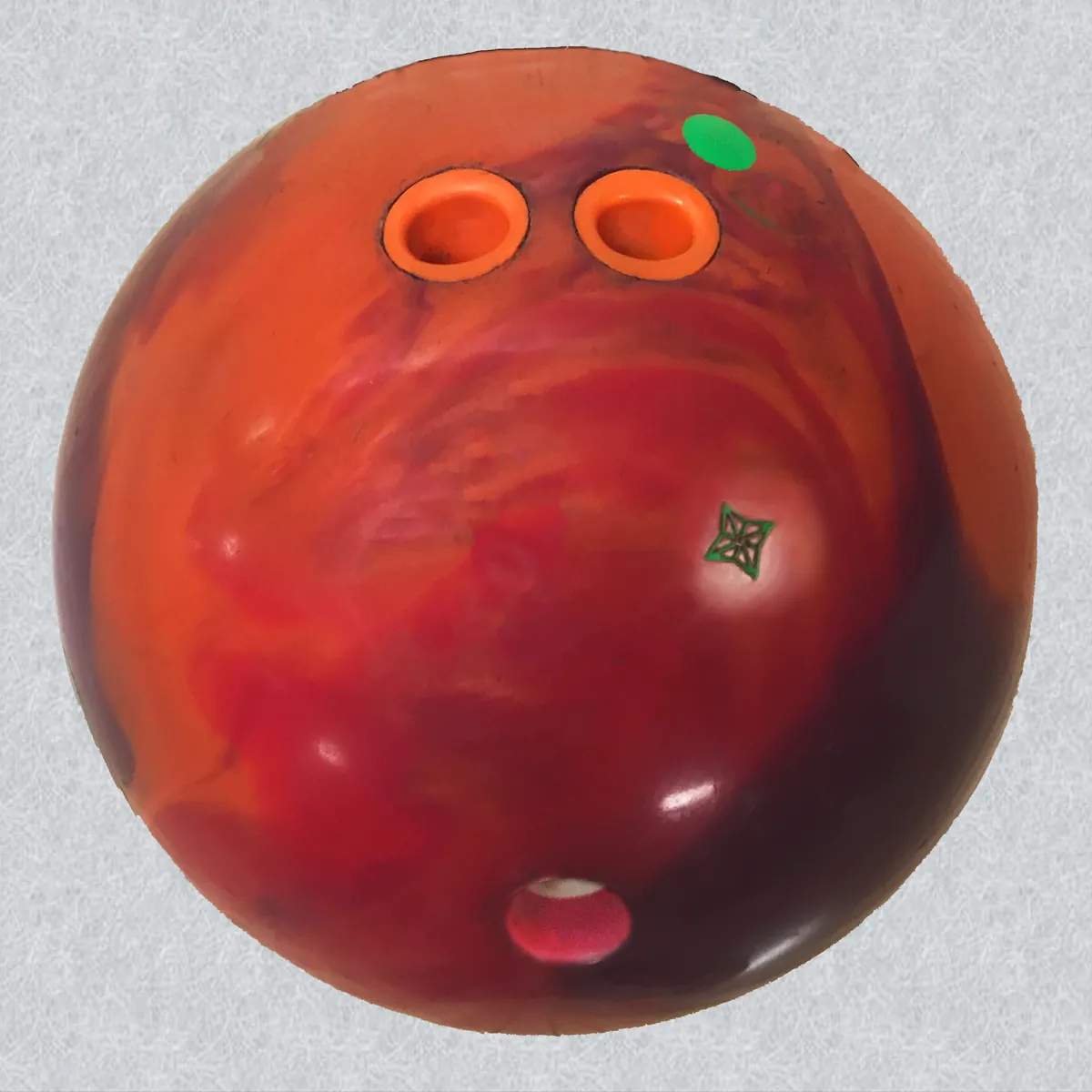
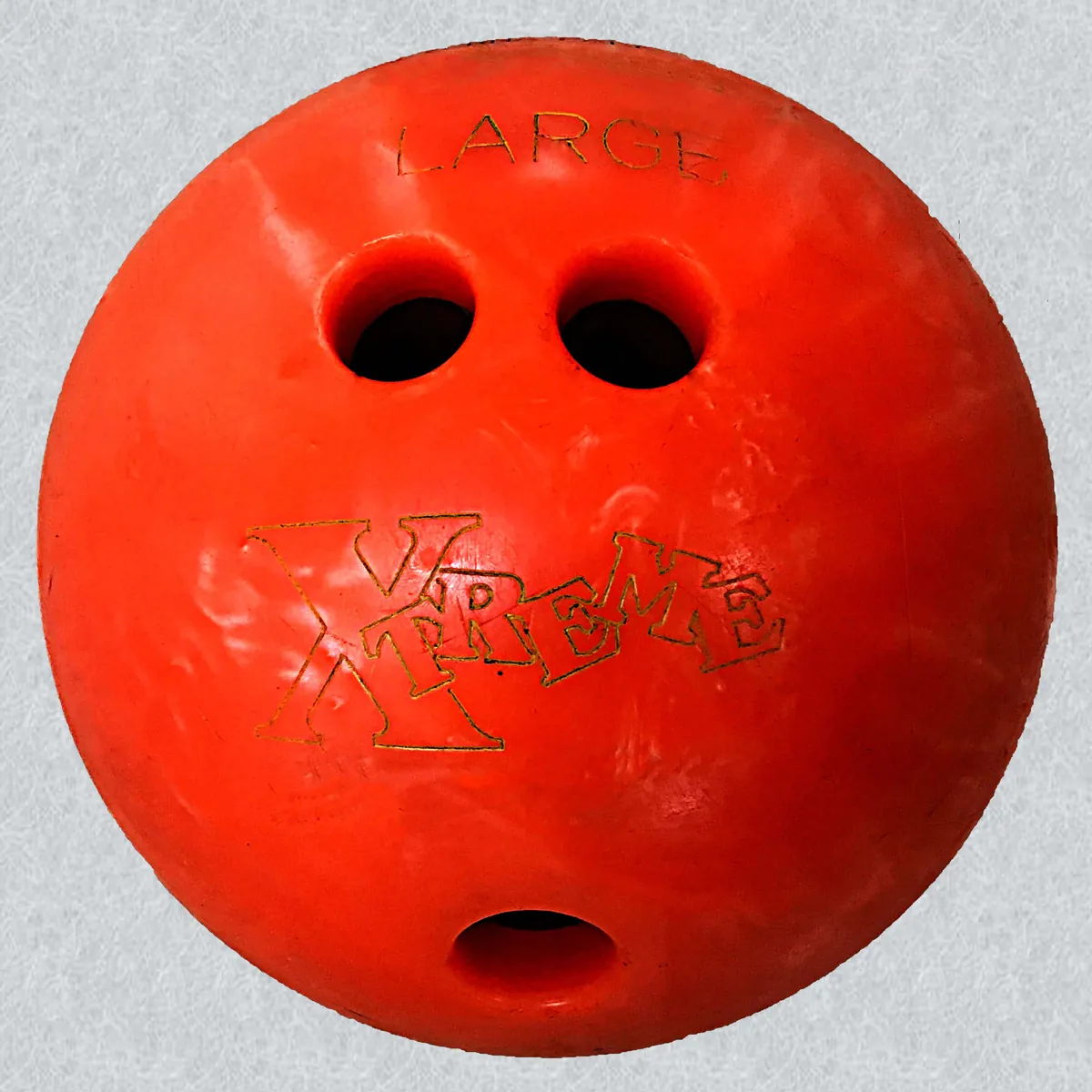
After a few games, your hand will tell you whether the drilling is right: it should never hurt. A blister or callus on your thumb, or the feeling that you have to squeeze the ball, means a hole is too tight or too loose, or the span is wrong. The technician can then adjust the fit with tape or an insert or, if necessary, plug the holes and redrill the ball.
Which ball should you buy, and at what price?
Balls are classified by their coverstock and their core, which determine how much they grip the lane. The prices below are retail prices noted in Europe and the United States in September 2026. They are only a guide: we do not know the prices charged in Morocco, which depend on the model, the stock and import costs.
| Ball type | Who it is for | Reference price |
|---|---|---|
| Polyester (“plastic”) | Straight delivery, spare ball | €60–80 / $60–80 |
| Entry-level reactive | Learning to hook, average below 150 | $60–100 |
| Mid-range (urethane or reactive) | League bowlers, average of 150 to 180 | €100–180 / $100–180 |
| High-end (asymmetric core) | Competitive bowlers, average above 180 | €180–300 / $180–300 |
In Europe, drilling charged separately costs between €30 and €60, with or without inserts depending on the shop; it is often included when the ball is bought at the pro shop. To choose the weight, coverstock and core type, read our guide on how to choose a bowling ball.
Bowling shoes
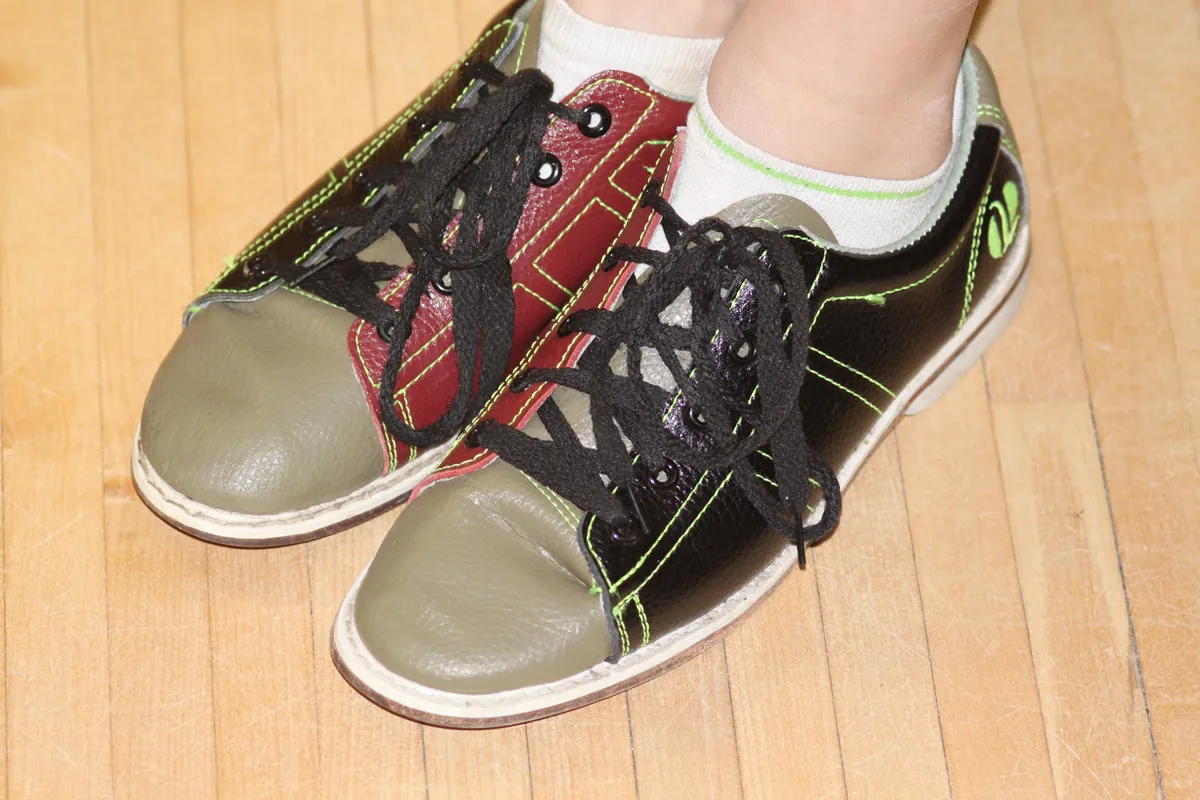
Personal shoes are often a regular bowler's first purchase: they cost less than a ball, get used at every session and always slide the same way, unlike rental shoes. They come in two families:
- Universal shoes, with a sliding sole on both feet: perfect for beginners, and for right-handers and left-handers alike. Expect to pay around $45–80.
- Performance shoes, specific to right-handed or left-handed bowlers: a sliding sole on the slide foot (the left foot for a right-hander), a braking sole on the other, and often interchangeable soles and heels to adapt to every approach. Expect to pay $100–300.
Never wear your bowling shoes outside the centre: the slightest speck of dust or drop of water on the sliding sole can make you trip on the approach. Find out more in our guide to bowling shoes.
The accessories that are really useful
| Accessory | What it is for | Reference price |
|---|---|---|
| Single-ball bag | Carrying your ball and shoes | $30–80 |
| 2- or 3-ball roller bag | As soon as you own a spare ball | $70–220 |
| Microfibre towel | Wiping off the oil after each shot | $10–20 |
| Ball cleaner | Cleaning the ball after each session | $11–14 |
| Thumb and finger tape | Adjusting the fit to heat and humidity | $13–14 |
| Rosin bag (grip) | Absorbing sweat from your hand | $7–13 |
| Finger inserts, thumb slug | Comfort and fine-tuning of the drilling | $8–13 each |
| Wrist support | Keeping your wrist firm at the release | $24–84 |
To find out in what order to kit yourself out and what total budget to plan for, see our guide to bowling equipment.
Looking after your ball
A reactive ball absorbs oil from the lanes and gradually loses its hook. Three habits keep it performing well:
- After every session: clean it with a microfibre towel and an approved cleaner, and store it at room temperature (never in a car boot in the middle of summer).
- Roughly every 50 to 80 games, as recommended by the manufacturers: have it resurfaced by the pro shop, which sands the surface to restore its original finish.
- When the ball “no longer hooks” and the oil ring darkens: an oil extraction (drawing the oil out with heat) restores a good part of its reaction.
To understand how oil affects the ball's path, read our guide to lane oil patterns.
Buying a ball online from Morocco: a good idea?
Ordering a ball from a foreign website often looks cheaper, but the sums change once everything is added up:
- Customs and VAT: since 1 July 2022, purchases made on foreign e-commerce platforms are no longer exempt from customs duties, whatever their value, and import VAT is generally 20%.
- Shipping costs: a ball weighs up to 7 kg, and many major websites do not ship directly to Morocco.
- Payment cap: since 1 January 2026, online purchases paid in foreign currency have been capped at 20,000 MAD per person per year.
- No advice, no trial: weight, coverstock and core are best chosen with a technician who has watched you bowl.
- The ball arrives without holes: it will have to be drilled anyway, and a pro shop may charge more to drill a ball bought elsewhere.
In most cases, buying from the Tamaris pro shop works out at the same final price, with advice and drilling thrown in. As far as we know, the major sporting goods chains in Morocco sell neither bowling balls nor bowling shoes, and online marketplaces offer little more than toy skittle sets for children.
When should you buy your first ball?
There is no official rule, but there is a simple benchmark: buy your own ball once you play regularly, for example every week or in a league, and rental balls are holding back your progress (holes too wide, the right weight never available, an inconsistent release). An average of 120 to 150 is a common point at which to take the plunge. Many bowlers start with shoes, then an entry-level reactive ball drilled to fit their hand, and later add a polyester spare ball.
The best way to improve with your new equipment is still to play often, alongside experienced bowlers: that is the whole point of the ASBM's weekly leagues in Rabat and Tangier, which are open to beginners.
Frequently asked questions
Where can I buy a bowling ball in Morocco?
At the Tamaris Bowling pro shop in Dar Bouazza (Casablanca), which sells balls and has a technician who drills them to fit your hand. As far as we know, it is the only bowling pro shop in Morocco.
How much does a bowling ball cost?
As a rough guide, a polyester ball costs about €60–80, an entry-level reactive ball $60–100, a mid-range ball €100–180 and a high-end ball €180–300 (European and US prices in 2026). Drilling is often included when you buy the ball at the pro shop.
Why have your ball custom-drilled?
A new ball is sold without holes. Drilled to fit your fingers and thumb, with the right span and the right angles, it can be held effortlessly, your thumb comes out cleanly and your release becomes consistent. That is what helps you improve, far more than the price of the ball.
Where can I buy bowling shoes in Morocco?
The Tamaris Bowling pro shop in Casablanca sells bowling shoes. As far as we know, the major sporting goods chains in Morocco do not stock them. For beginners, a universal pair (sliding sole on both feet) is all you need.
Can I buy a bowling ball online and have it delivered to Morocco?
Yes, but you have to factor in shipping costs, customs duties and VAT (online purchases from abroad lost their exemption in July 2022), and the ball will arrive without holes: it will have to be drilled by a pro shop anyway.
How often should a bowling ball be resurfaced?
Manufacturers recommend having it resurfaced by a pro shop roughly every 50 to 80 games (Motiv: about 50 games; Storm: 60 to 80 games), and cleaning it with an approved product after every session.
Sources and references
- Tamaris Bowling: overview, prices and opening hours
- Team Tamaris Bowling, 14 May 2012: “ProShop à Tamaris Bowling”
- USBC – ITRC Pro Shop Clinic (technician training)
- USBC – new bowling ball specifications (balance holes, 2020)
- Storm – layout systems (VLS)
- Storm – ball care guide
- Motiv – ball maintenance
- BowlersMart – bowling ball buyer's guide
- Bowling.com – bowling shoe guide
- B29 Toulouse – price of a bowling ball
- FNH – end of the customs exemption on online purchases (2022)
- Le360 – 2026 e-commerce allowance