Key points
- Bowling shoes are mandatory in every centre: for player safety and to protect the approach.
- A right-hander slides on the left foot, a left-hander on the right foot.
- Rental shoes have two sliding soles so they suit everyone; personal shoes have one sliding sole and one braking sole.
- High-end models have interchangeable soles and heels to fine-tune the slide.
- Never walk outside in bowling shoes: water, gravel or chewing gum will ruin the slide.
Why are bowling shoes mandatory?
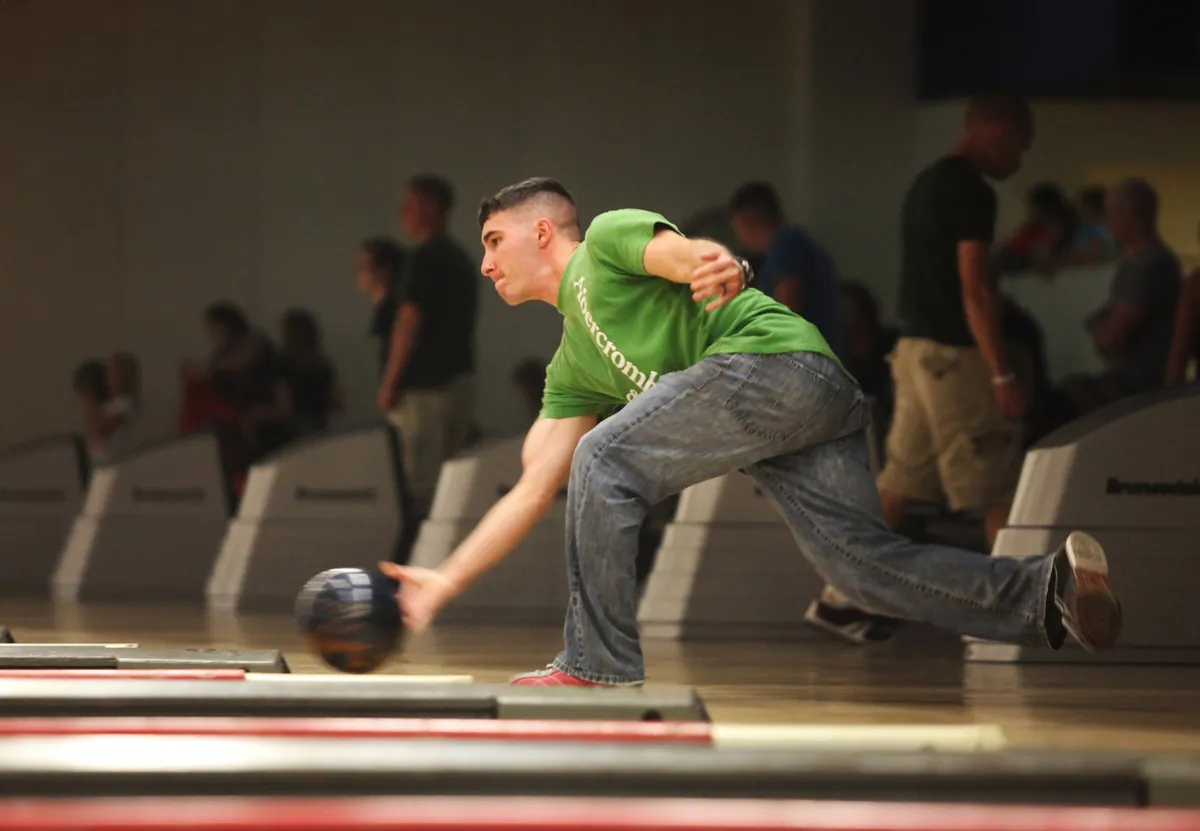
Bowling shoes are mandatory for two reasons: player safety and protecting the approach. As you release the ball, your last step ends in a slide of a few dozen centimetres. The rubber sole of a trainer or a street shoe would grip sharply on the smooth surface of the approach, which can send you falling forward or injure your knee.
The second reason is maintenance. The approach is a polished wood or synthetic surface that has to stay clean and even so that every player slides the same way. Street shoes bring in sand, water and grit that scratch the surface and create sticky spots. That is why centres require either their own shoes or personal bowling shoes worn indoors only.
If it is your first time bowling, bring socks: most centres require them with rental shoes, and some sell them on site. More tips in your first time bowling.
How is a bowling shoe made?
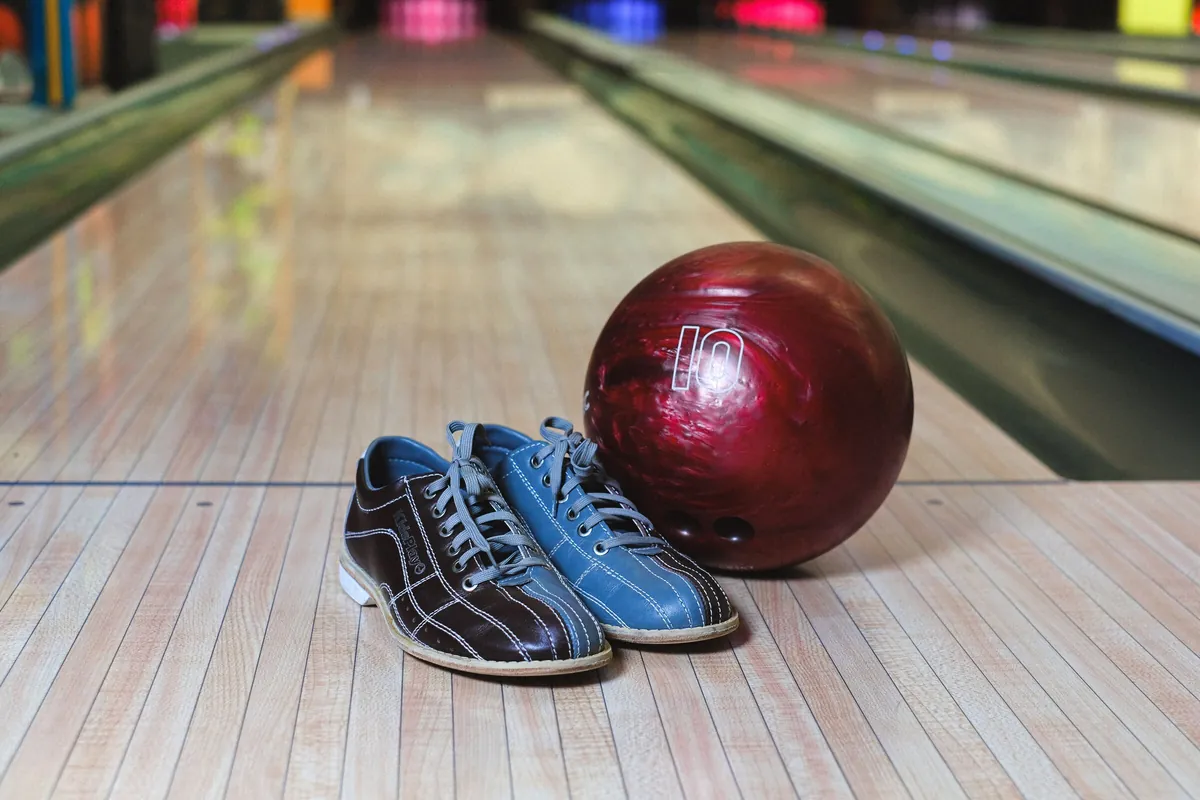
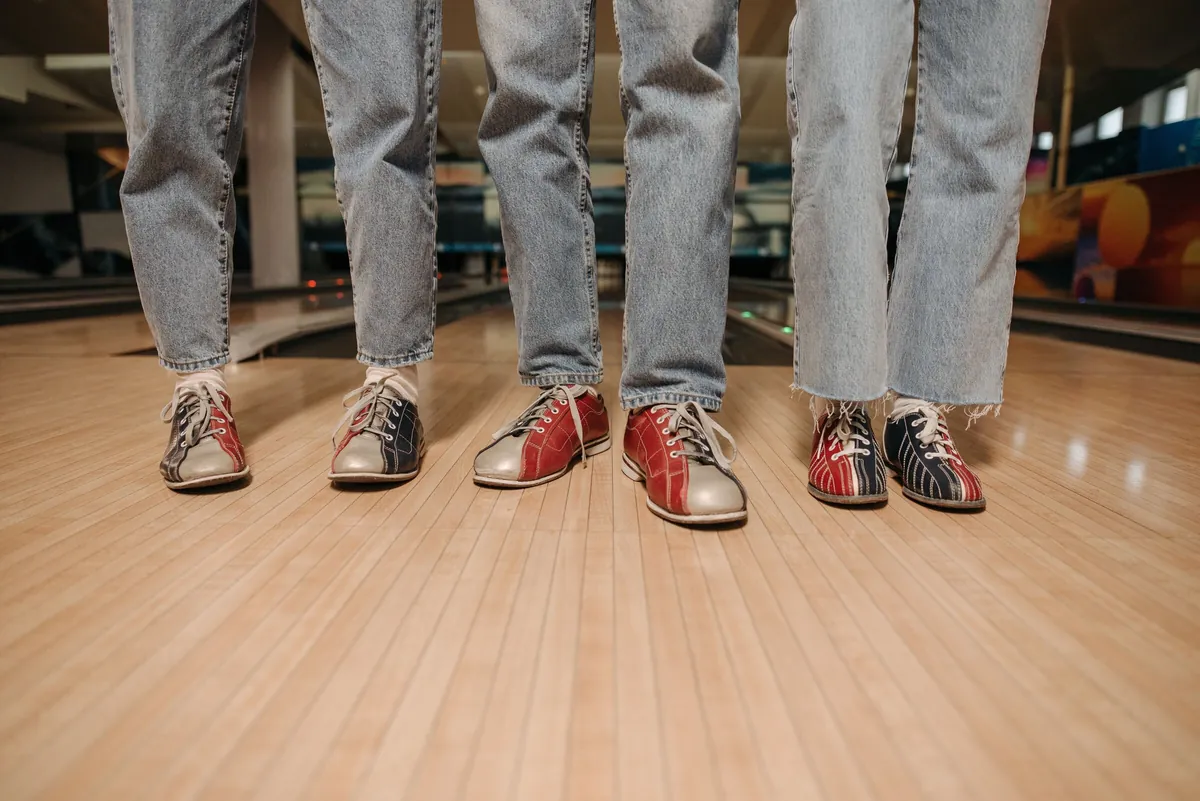
What sets a bowling shoe apart is its sole: smooth and slippery under the sliding foot, grippier under the pushing foot. The rest of the shoe looks like a low-cut sports shoe with reinforced lateral support.
| Part | Sliding foot (left for a right-hander) | Pushing foot (right for a right-hander) |
|---|---|---|
| Forefoot sole | Microfibre, felt or leather: slides | Rubber: grip and push-off |
| Heel | Material that brakes at the end of the slide | Rubber |
| Role | Slide up to the foul line, then stop | Push during the approach, stabilise the finish |
The heel of the sliding shoe plays a subtle but important role: at the end of the slide, the bowler presses lightly on the heel to stop just before the foul line. That is what lets you hold a balanced finish, as described in basic bowling technique.
Rental shoes or your own shoes?
For an occasional bowler, rental shoes are more than enough. For a player who bowls at least twice a month, buying a pair pays for itself and makes a clear difference to consistency.
| Criterion | Rental | Your own shoes |
|---|---|---|
| Soles | Two sliding soles (ambidextrous) | Sliding sole + pushing sole, for right- or left-handers |
| Slide | Varies with how worn the pair is | Consistent from one session to the next |
| Comfort and fit | Standard sizes, often wide | Fitted to your foot |
| Hygiene | Disinfected by the centre between customers | Yours alone |
| Cost | Rental fee on every visit (see the centres’ prices) | One-off purchase, around €50–90 for entry-level models |
Rental shoes have two sliding soles so that the same pair suits both right- and left-handers. It is practical, but the pushing foot slides too, which reduces push-off and stability. Rental prices vary from one centre to another; check the listings of bowling centres in Morocco. To buy your own pair in Morocco, the Tamaris Bowling pro shop in Casablanca sells bowling shoes.
What types of bowling shoes are there?
- Ambidextrous models: two sliding soles, like rental shoes. They suit occasional bowlers who want their own pair for hygiene and comfort.
- Entry-level right- or left-handed models: a fixed sliding sole on one side, a rubber sole on the other. This is the best choice for a regular bowler.
- Performance models: interchangeable soles and heels, attached with hook-and-loop fastening. You change the sole to suit the approach (more or less slippery, ambient humidity) or your style. They are aimed at league bowlers and competitive players.
Performance models come with several slide soles, marked with a code that indicates how much they slide. Each manufacturer has its own scale: read the instructions before changing soles.
How do you choose the right size?
Choose the same size as your sports shoes, with a firm fit but no pressure points. Your foot must not move inside the shoe during the slide, otherwise your last step loses its precision. Try them on with the socks you wear to bowl and take a few sliding steps if possible.
- Width: some models come in standard and wide fittings; a wide foot squeezed into a narrow shoe tires quickly over three games.
- Fastening: laces for a precise fit, hook-and-loop straps for speed; both work fine.
- Side: make sure it really is a right-handed model (slides on the left) or a left-handed model (slides on the right).
How do you look after bowling shoes?
The golden rule: never leave the centre with your bowling shoes on. A single puddle or a walk along a sandy pavement is enough to change the slide, or even make the sole sticky.
- Change shoes on site: put them on when you arrive and take them off before you leave.
- Use shoe covers if you have to leave the playing area (toilets, snack bar), where the floor may be wet or sticky.
- Brush the slide sole with a suitable brush, supplied with some models, to remove dust and lift the microfibre.
- Air-dry them, away from direct heat, and store them in a separate compartment of your bag.
- Check the slide before bowling: a test slide step on the approach will reveal a dirty sole.
If you feel your foot sticking during a game, stop and check the sole. A bit of chewing gum or a drop of drink can stop your slide dead. Also let the staff know about a wet or dirty approach.
Do children need special shoes?
Yes, children wear bowling shoes too, and centres rent out small sizes. For very young children who use a ramp and do not slide, some centres accept clean sports shoes worn indoors only: ask on site. To plan a family outing, see bowling with kids.
If you are thinking of adding to your kit, our guide to bowling equipment sets out what to buy first. And if you are looking for a setting to bowl regularly, the ASBM (Association Sportive du Bowling Marocain, the Moroccan Bowling Sports Association) welcomes players to its weekly league at the Megamall in Rabat.
Frequently asked questions
Why do you have to wear special shoes for bowling?
Their smooth sole lets you slide as you release the ball, whereas a street shoe would grip and could make you fall. They also protect the approach from sand, water and grit.
Can I bowl in my own trainers?
No, centres do not allow street or sports shoes on the approach. You must wear bowling shoes, either rented on site or your own.
Which foot do you slide on in bowling?
On the foot opposite your bowling arm: the left foot for a right-hander and the right foot for a left-hander. Personal shoes have a sliding sole on that side.
Do I need socks to rent bowling shoes?
Yes, most centres require socks with rental shoes for hygiene reasons. Remember to bring a pair.
When is it worth buying your own bowling shoes?
As soon as you bowl about twice a month or more. Your own pair gives you a consistent slide, better support and better hygiene.
Sources and references