Key points
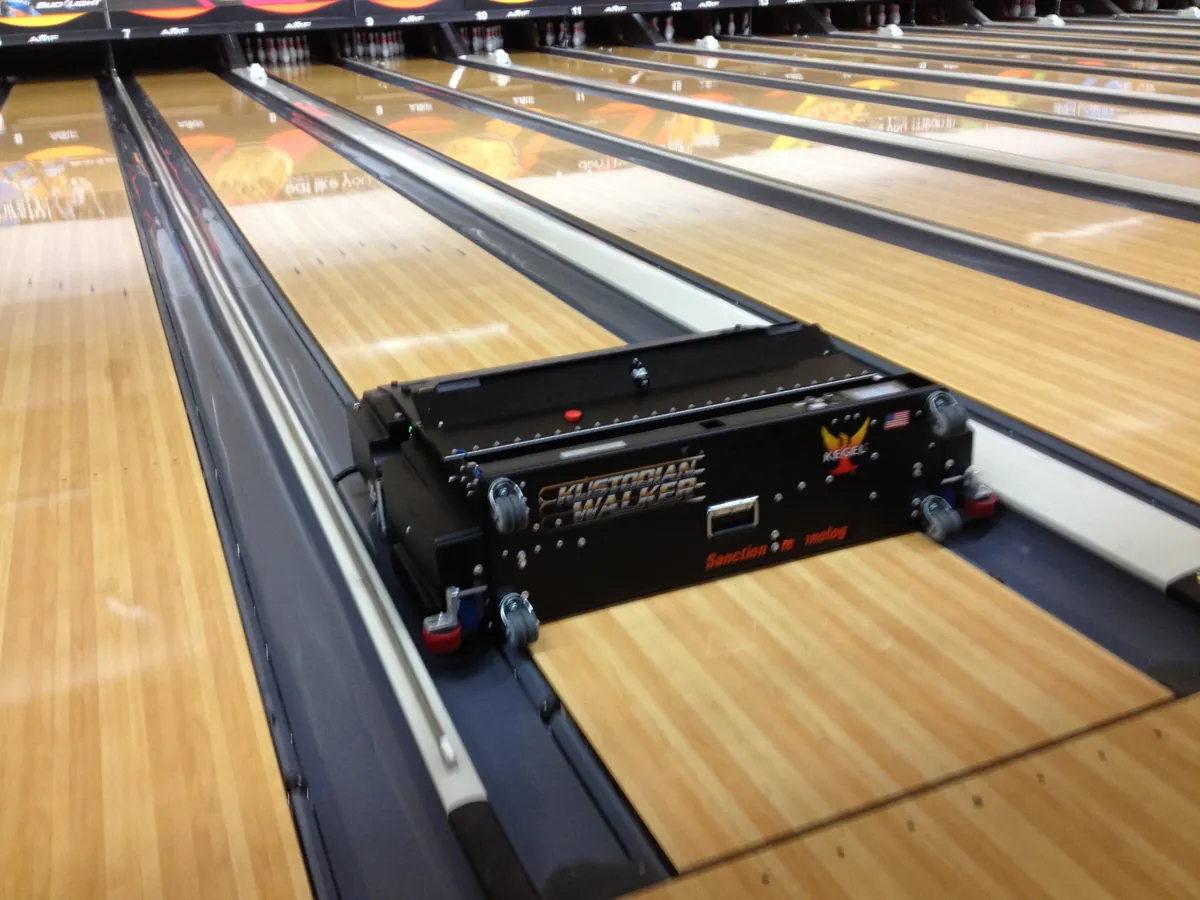
- The oil (or conditioner) is applied by an automatic machine; it is made up of about 98% mineral oil plus additives.
- An oil pattern is described by its length (in feet from the foul line), its volume and its side-to-side distribution.
- The house shot used in bowling centres concentrates oil in the middle: the centre-to-edge ratio can exceed 10 to 1, which guides the ball towards the pocket.
- Sport patterns certified by the USBC have a ratio of 3 to 1 or less, which is far more demanding.
- Classic rule of thumb: the breakpoint sits at roughly board pattern length minus 31.
Why are bowling lanes oiled?
Oil does two jobs: it protects the lane surface from the impact and friction of thousands of balls, and it creates areas where the ball skids and areas where it grips, which is what makes the game playable. Without oil, a reactive ball would hook within the first few metres and end up in the gutter; on a lane oiled from end to end, no ball would hook at all.
The product used, called conditioner, is made up of roughly 98% mineral oil plus additives that slow down its breakdown. It is applied by an automatic machine that travels down the lane, cleans off the old layer and then lays down the new one according to a precise programme. The oil never covers the whole lane: it stops well short of the pins, and the last few metres stay dry, which lets the ball hook into the pocket.
That is why you never step over the foul line: the surface beyond it is slippery, and shoe soles dirty the lane. See also our guide to bowling etiquette.
What is an oil pattern?
An oil pattern is the map of how oil is distributed on the lane. It is described by three main measurements:
- Length: the oiled distance from the foul line, expressed in feet. Patterns are commonly described as short (up to about 36 feet, or 11 m), medium (roughly 37 to 42 feet) and long (43 feet or more, i.e. over 13 m).
- Volume: the total amount of oil applied, measured in millilitres. The more oil there is, the more the ball skids and the less it hooks.
- Ratio: the amount of oil in the middle of the lane compared with the amount on the outside. This is what separates an “easy” lane from a demanding one.
Every centre programmes its own pattern, and tournament organisers choose one from public libraries, such as the one published by lane machine manufacturer Kegel. The PBA names its competition patterns after animals (Cheetah, Viper, Chameleon, Scorpion, Shark, Bear, Badger…), each with a different length and shape.
House shot vs sport pattern: what's the difference?
The house shot, the standard oil pattern centres use for casual bowling and leagues, concentrates oil in the middle and leaves the outside boards relatively dry. A ball that goes slightly too far right (for a right-hander) hits the dry area, grips and comes back to the pocket; a ball that goes too far left meets the oil, skids and doesn't hook too early. In other words, the lane “corrects” some of your mistakes.
| Criterion | House shot | Sport pattern |
|---|---|---|
| Use | Casual bowling, standard leagues | Tournaments, national and international competitions, sport leagues |
| Centre-to-edge ratio | Often 8:1 to more than 10:1 | 3:1 or less (USBC rule) |
| Margin for error | Wide, the lane brings the ball back | Small, missing by a few boards is costly |
| Scores | Higher | Much lower for the same skill level |
This difference explains why a league bowler averaging 200 can drop to 170 in a tournament. It also explains why federations distinguish between averages bowled on one type of lane condition and the other. To find out more about how averages are used, see average and handicap.
How does pattern length change the game?
The longer the pattern, the longer the ball skids and the further inside you need to play. On a short pattern, the ball reaches the dry part of the lane early and hooks early: you tend to play close to the edge, in a straight line. On a long pattern, you need to send the ball further towards the middle and give the hook more room.
The rule of 31
A simple rule of thumb lets you estimate the breakpoint (the point where the ball starts to hook): subtract 31 from the pattern length in feet. On a 40-foot pattern, the ball should ideally start turning around board 9; on a 44-foot pattern, around board 13. It is only a starting point, and it assumes a hook delivery from an intermediate-level bowler, but it saves you from searching blindly on your first few shots.
Why does the lane change during a game?
The lane changes with every shot: this is called transition. Two effects combine:
- Breakdown: balls absorb and move the oil in the area where everyone plays. That area gets drier and balls hook earlier there.
- Carry-down: balls carry oil further down the lane, into the area that is normally dry. Balls then skid further and hook less close to the pins.
In practice, after a few games a right-hander often notices that the ball is hitting too high in the pocket or crossing over to the other side of the headpin: the playing area has dried up. The classic response is to move left to find the oil again. Polyester balls are not very sensitive to these changes; reactive balls are much more so.
How do you read the lane and adjust?
Reading the lane means watching how the ball reacts to work out where the oil is. A few simple habits are enough for most bowlers:
- Watch where the ball turns: if it hooks before the spot you expected, the lane is drier than you thought; if it goes straight on, it is oilier.
- Follow your miss with your feet: ball too far left, move left; ball too far right, move right, keeping the same arrow.
- Use the “2-and-1” rule: moving your feet 2 boards and your target 1 board in the same direction changes the angle without drastically changing your line.
- Change speed or ball: a more aggressive or slower ball grips more; a smoother or faster ball skids further.
- Watch the other bowlers: their balls on the same pair of lanes show how the oil is changing.
On a pair of lanes, each lane can react differently. Note down your settings (foot position, arrow) for each one.
Are lanes oiled the same way in Morocco?
No, and this is actually the big difference between Moroccan bowling centres. Only two centres oil their lanes with a proper lane machine: Tamaris Bowling in Casablanca and the Megamall bowling centre in Rabat. These are the two centres that offer the best conditions for experienced bowlers and competitors: a consistent pattern, identical from one lane to the next, which lets you read the lane and work on your hook.
In the country's other centres, oiling is most often done by hand or with a faulty machine. The lanes there are more irregular: dry spots, unevenly spread oil, conditions that vary from one lane to another. For a game with friends, that's not a problem; to improve or prepare for a tournament, you're better off bowling in Casablanca or Rabat.
If you want to get used to more demanding conditions, competition is the best place to do it: the ASBM (Association Sportive du Bowling Marocain, the Moroccan Bowling Sports Association) runs a weekly league at the Megamall in Rabat, as well as the Intercity Strike Cup between several cities. To find a lane, browse the bowling centres in Morocco. And to choose a ball that reacts to the oil the way you want it to, read how to choose a bowling ball.
Frequently asked questions
Why are bowling lanes oiled?
Oil protects the lane surface and creates areas where the ball skids and others where it grips. Without it, balls would hook too early and the lane would quickly get damaged.
What is a house shot in bowling?
It is the standard oil pattern used in bowling centres: lots of oil in the middle, little on the outside. This distribution steers the ball back towards the pocket and makes the game easier than on a competition pattern.
How far down the lane does the oil go?
It depends on the pattern: usually between about 32 and 47 feet, or roughly 10 to 14 m from the foul line. The last few metres before the pins stay dry.
What is the rule of 31?
It is a rule of thumb for estimating the board where the ball should start to hook: the pattern length in feet minus 31. For a 40-foot pattern, you aim for a breakpoint around board 9.
Why does my ball react differently later in the game?
Because the lane changes: oil is absorbed in the playing area (breakdown) and carried further down the lane (carry-down). You then need to move your feet and your target to find the right line again.
Sources and references