Key points
- Objects resembling a game of skittles were found in an Egyptian child's tomb dated to around 3200 BC.
- In medieval Germany, Kegeln (a nine-pin game) was played even in church courtyards.
- Ten-pin bowling took hold in the United States in the 19th century; the American Bowling Congress standardised the rules in 1895.
- The AMF automatic pinsetter, unveiled in 1946, was installed commercially in 1952 and ushered in the era of the big bowling centres.
- In Morocco, the first bowling alleys opened as early as 1953 in Tangier and Casablanca; modern bowling was revived with leisure centres from 2005, and the ASBM (Association Sportive du Bowling Marocain, the Moroccan Bowling Sports Association), founded in 2007 in Rabat, gave the sport a competitive structure.
Where does bowling come from?
Bowling is the heir to pin games, which are among the oldest known games of skill. The most frequently cited example comes from Egypt: the British archaeologist William Flinders Petrie described objects found in a child's tomb, dated to around 3200 BC, that resemble pins and a small stone ball. Historians still debate exactly how to interpret them, but they show that the idea of knocking down targets by rolling a projectile is very old.
Other games of the same family existed in many civilisations: ball games in Greece and Rome, wooden skittles in Northern Europe, stone games in Polynesia. None of them is, strictly speaking, “the first bowling”: the modern sport is the result of a long evolution, mainly European and then American.
Kegeln: skittles in medieval Germany
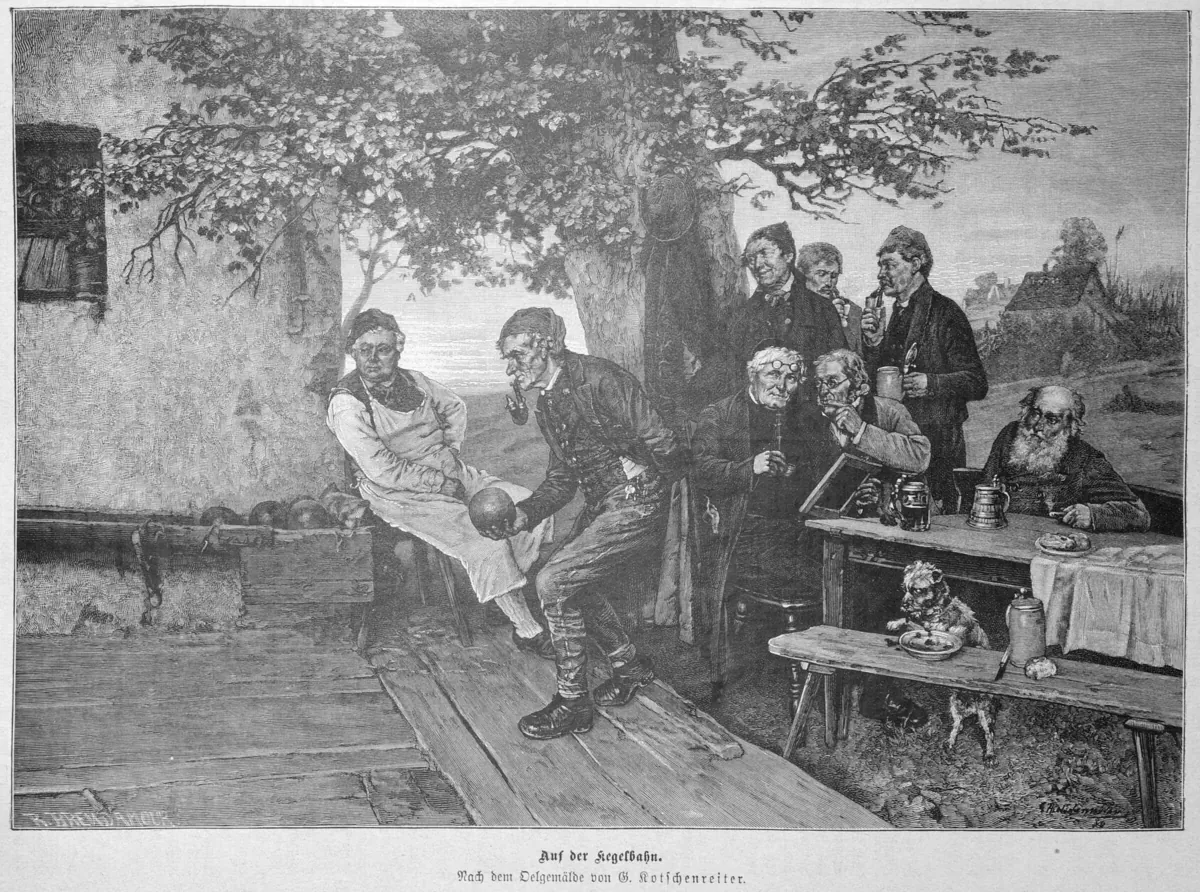
The direct ancestor of modern bowling is found in the Germanic countries, where the game of skittles, called Kegeln, was very popular in the Middle Ages. According to an often-told tradition, the game sometimes had a moral or religious dimension: the pin represented evil, and knocking it down was a sign of virtue. The number of pins varied from region to region, from three to more than a dozen.
Tradition credits Martin Luther, in the 16th century, with setting the number of pins at nine. This anecdote is not reliably documented, but the game with 9 pins arranged in a diamond did indeed become the dominant form in Central Europe. It still exists today: nine-pin bowling remains an organised sport in Germany, Austria and the Czech Republic.
How did bowling go from 9 to 10 pins?
The switch to 10 pins happened in the United States in the 19th century. Dutch, German and British immigrants had brought over the nine-pin game, which quickly became very popular, but also became associated with gambling. In the 1830s and 1840s, several states and cities banned nine-pin bowling to fight gambling.
According to a widely told explanation, alley owners simply added a tenth pin to get around the letter of these laws. Historians remain cautious about this story, but what is certain is that the game with 10 pins arranged in a triangle took hold in America in the second half of the 19th century, with rules, balls and dimensions that still varied a great deal from one alley to the next.
1895: the birth of modern bowling
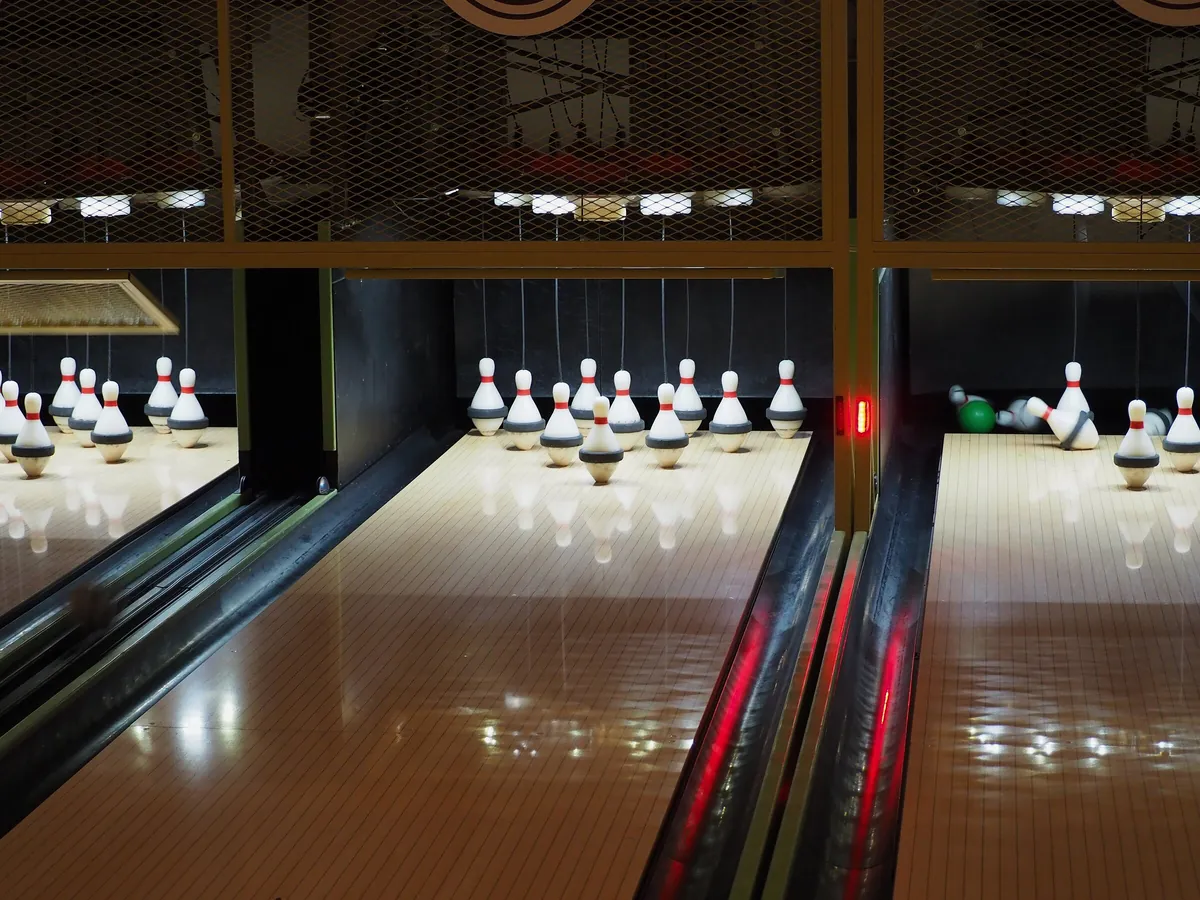
The founding date of bowling as a sport is 1895: on 9 September, the American Bowling Congress (ABC) was created in New York. Its role was to standardise the rules: lane dimensions, maximum ball weight, pin size, and the 10-frame scoring system with strikes and spares. These principles are still the ones you find on a modern lane: 18.29 m from the foul line to the headpin (1-pin), 38.1 cm pins and a perfect game of 300 points.
Women organised in turn with the Women's International Bowling Congress, founded in 1916. In 2005, the ABC, the WIBC and the youth organisations merged to form the United States Bowling Congress (USBC), which remains the leading authority for certifying equipment and scores in the United States.
The automatic pinsetter changes everything
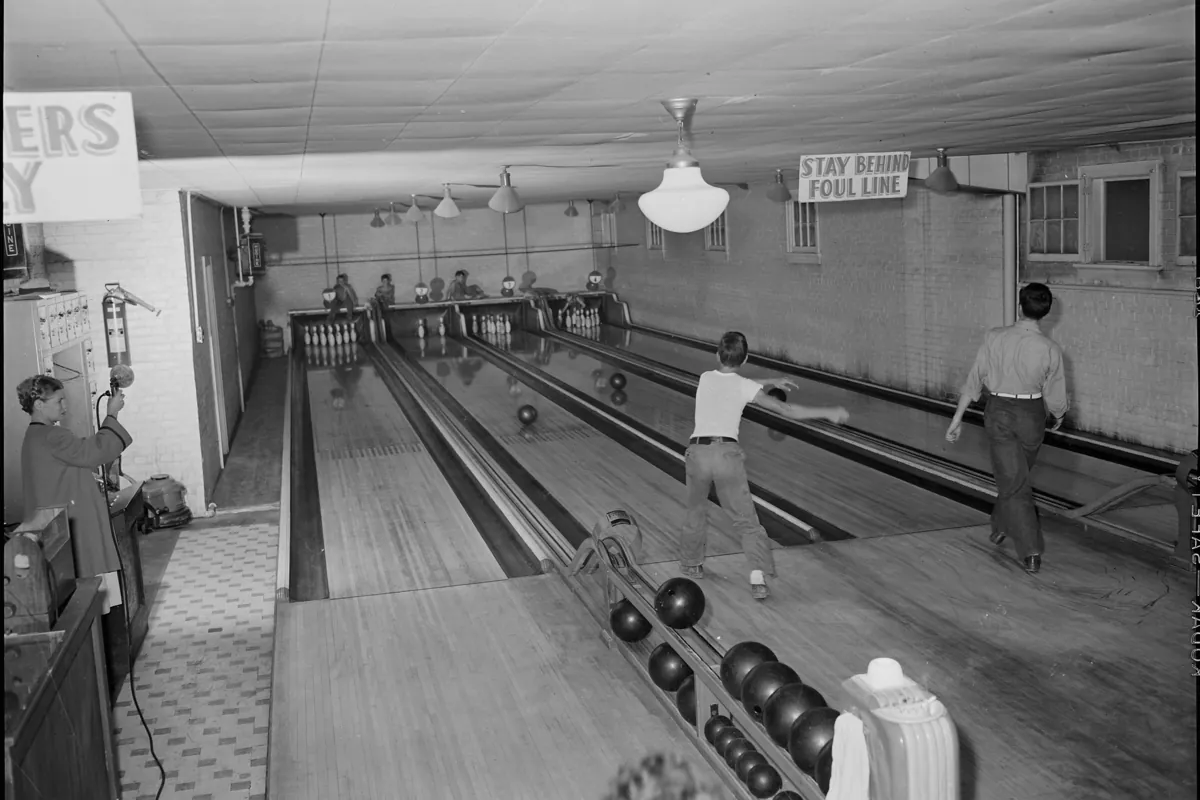
Until the mid-20th century, pins were reset by hand by “pinboys”, often young boys paid by the game. The work was hard, slow and sometimes dangerous. In 1946, at the ABC tournament in Buffalo, the American Machine and Foundry company (AMF) unveiled a prototype automatic pinsetter: a machine weighing more than two tonnes that was still unreliable. After several years of development, the 82-30 model was installed commercially in 1952 at an alley in Brooklyn, New York.
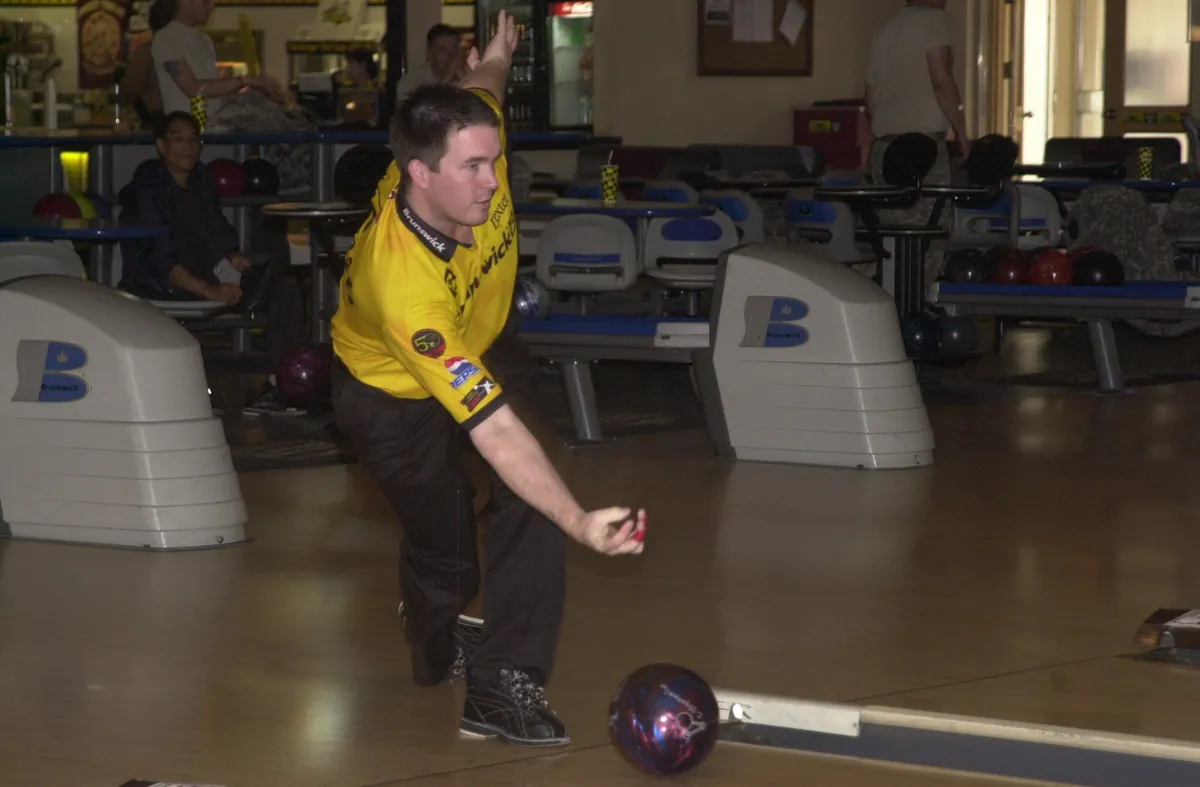
Mechanisation turned bowling into a mass leisure activity. Alleys became large centres open late into the night, leagues multiplied and television took up the sport. The Professional Bowlers Association (PBA) was founded in 1958 and its professional tour, broadcast on American television, made the great champions household names.
Bowling timeline: key dates
- Around 3200 BC Objects suggesting a pin game in a child's tomb in Egypt.
- Middle Ages Kegeln spreads through the Germanic countries.
- 19th century The ten-pin game takes hold in the United States.
- 1895 The American Bowling Congress is founded in New York and the rules are standardised.
- 1916 The Women's International Bowling Congress is founded.
- 1946 AMF unveils its prototype automatic pinsetter.
- 1952 First commercial installations of the AMF pinsetter; the Fédération Internationale des Quilleurs (FIQ) is founded in Hamburg.
- 1958 The Professional Bowlers Association (PBA) is founded.
- 1979 The international federation is recognised by the International Olympic Committee.
- 1988 Bowling is a demonstration sport at the Seoul Olympic Games.
- 2005 The USBC is created through a merger of the American organisations.
- 2007 The ASBM is founded in Rabat.
- 2020 The world federation takes the name International Bowling Federation (IBF).
How did bowling spread to Europe and the rest of the world?
Ten-pin bowling became established in Europe mainly after the Second World War, driven by American influence and the arrival of automatic machines. Centres opened in the United Kingdom, Scandinavia, Germany, France and the Netherlands in the 1960s, often as fashionable places for a night out. The sport was organised internationally through the FIQ, founded in 1952 in Hamburg, which became World Bowling in 2014 and then the International Bowling Federation in 2020, with its headquarters in Lausanne.
Asia experienced a real boom in the 1970s, particularly in Japan, and later in South Korea, Malaysia and the Gulf countries, which are now among the strongest bowling nations. For an up-to-date overview, see our page on bowling around the world.
What about bowling in Morocco?
Bowling came to Morocco with the Americans: as early as 1953, lanes opened in Tangier and Casablanca, where the Bowling Casablancais had 14 lanes on Boulevard Gambetta, and the American bases at Kenitra, Nouasseur and Sidi Slimane had their own bowling alleys. The whole story is told in our article on the history of bowling in Morocco.
Today, bowling has mainly developed as a leisure activity in large entertainment centres, often located in shopping malls. The bowling centre at the Megamall in Rabat, in business for more than twenty years, is one of the best-known examples; other centres have opened in Casablanca, Marrakech, Tangier and elsewhere. You can find them all in our directory of bowling centres in Morocco.
Competitive bowling, with leagues, rankings and tournaments, is more recent. The Association Sportive du Bowling Marocain (ASBM), founded in 2007 in Rabat, was a pioneer: it runs a weekly league at the Megamall, has opened a section in Tangier and created the Intercity Strike Cup, a tournament that brings together bowlers from several Moroccan cities and from abroad. Morocco does not yet have a national bowling federation, but the announcement that bowling will feature at the 2027 African Games in Egypt opens up new prospects for the sport on the continent.
Frequently asked questions
Who invented bowling?
Nobody invented bowling single-handedly: it descends from pin games played since antiquity, and then from German Kegeln. Its modern ten-pin form took shape in the United States in the 19th century and its rules were standardised by the American Bowling Congress in 1895.
Which country does bowling come from?
Pin games are very old and widespread, but the direct ancestor of bowling comes from the Germanic countries. Ten-pin bowling as it is played today was born in the United States.
Why are there 10 pins in bowling?
Nine-pin bowling was banned in several American states in the 1830s–1840s because of gambling. According to the most widespread explanation, adding a tenth pin was a way of getting around these bans.
Since when have pins been reset automatically?
AMF's automatic pinsetter was unveiled in 1946 and first installed commercially in 1952 in Brooklyn. Before that, “pinboys” reset the pins by hand.
Is bowling an Olympic sport?
No. The international federation has been recognised by the IOC since 1979 and bowling was a demonstration sport at the 1988 Seoul Games, but it has never been on the official Olympic programme.